Who I Was Playing For
- Intermezzo -
I feel like I write better when I use myself as the point of reference, but it makes me incredibly uncomfortable to say this.
For so long, I've tried to avoid my own perspective. It stems from this sense of self-importance I’ve been trying to get away from. I’ve been trying to get away from it because I not only write poorly but make bad life decisions when I think too highly of myself.
But I found the solution was realizing I shouldn't be avoiding this–the originality comes from saying it the way that I only can.
What brought all this to mind is that I’ve been reading My Struggle, whose author, Karl Ove Knausgård, has gone on record to say that he writes exclusively for himself. And if you’re familiar with this series, I believe it’s this perspective that allowed him to disregard an ethical boundary that shouldn’t have been.
Exposing people’s personal lives, people you supposedly care about, in the most detailed way possible, all without their permission, is a line I can never condone crossing. I believe this about art as well, that, no matter what function or purpose it serves, the inherent risk should be borne by the artist alone.
Then again, I’ve only become aware of these actions I would never take because he's the one who took them. I wouldn't be thinking or writing about this either.
So I’m glad Knausgård wrote what he did–but not for the reasons mentioned.
I’m midway through volume five and the entire reading experience has expanded my attention and awareness to a level I didn’t imagine was achievable. Because of this, it’s not only transformed the way I read but the way I look at writing.
I’m looking forward to finishing the whole spectacle (the last volume alone is one thousand plus pages).
Then I never want to read it again.
• • •
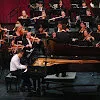
I was having dinner at my old professor’s place when he brought up how, at least in the U.S., classical music concert attendance was dying out everywhere.
But I didn’t bother to follow up on his statement. I couldn’t even bother myself to care, since I was the one he was talking about.
I’m the one who loves classical music but hates going to concerts.
It's partly due to the logistics and cost–I don’t want to drive across the freeway or pay the exorbitant price for tickets.
And anyways, I’m happy to listen to classical music all alone. In fact, I prefer it that way.
But the real reason is that I’m never interested in what’s being presented.
It’s like the music is programmed for everyone but me.
I never grew up listening to classical music, I only played it because my piano teachers forced me to.
Even when I dedicated myself to performing classical music in college, I still felt like an outsider. I got along with my classmates, but I could never relate since it felt like they were involved from an earlier age.
But if I had any confidence, it was in the way I chose to present my program. It was a matter of pace–a variety of pieces, short, medium, and long, from many different genres.
I wanted to satisfy everyone.
The reason for this is that, most of the time, I invited my friends, friends who didn’t know anything about classical music.
I wanted them to know that they were part of the audience, the ones I was really playing for.
The comment I remember to this day is the one a friend made. He was at one of my recitals, in which I concluded with Ravel’s Valses nobles et sentimentales.
'I actually liked everything you played,' he said, 'but I liked that last one the best.
The way it faded out, that was pretty cool.'
Now I realize I was really playing for myself.